If you've been watching Spokane headlines, you've absorbed the shorthand: homes sell fast, offers stack up, days on market sit in the teens. Across the metro area, that's roughly true. Homes sold in about 15 days over the three months ending in June 2026, and most of them closed near asking price.
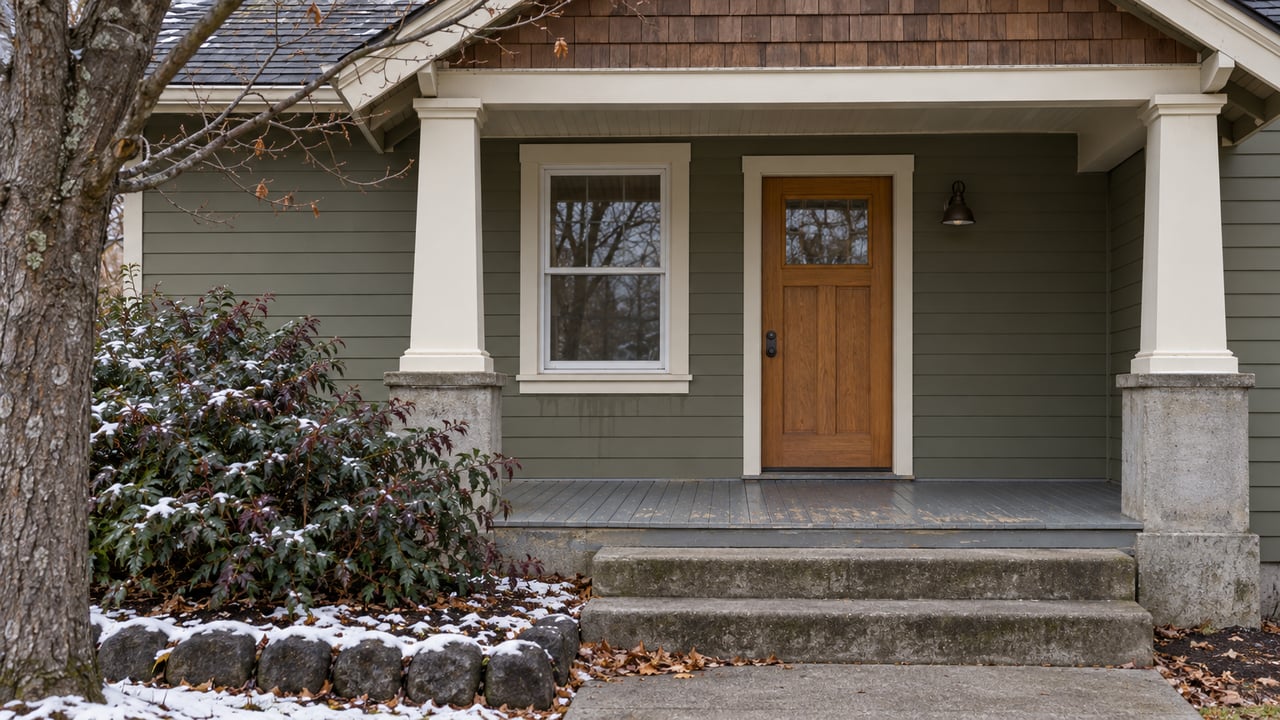
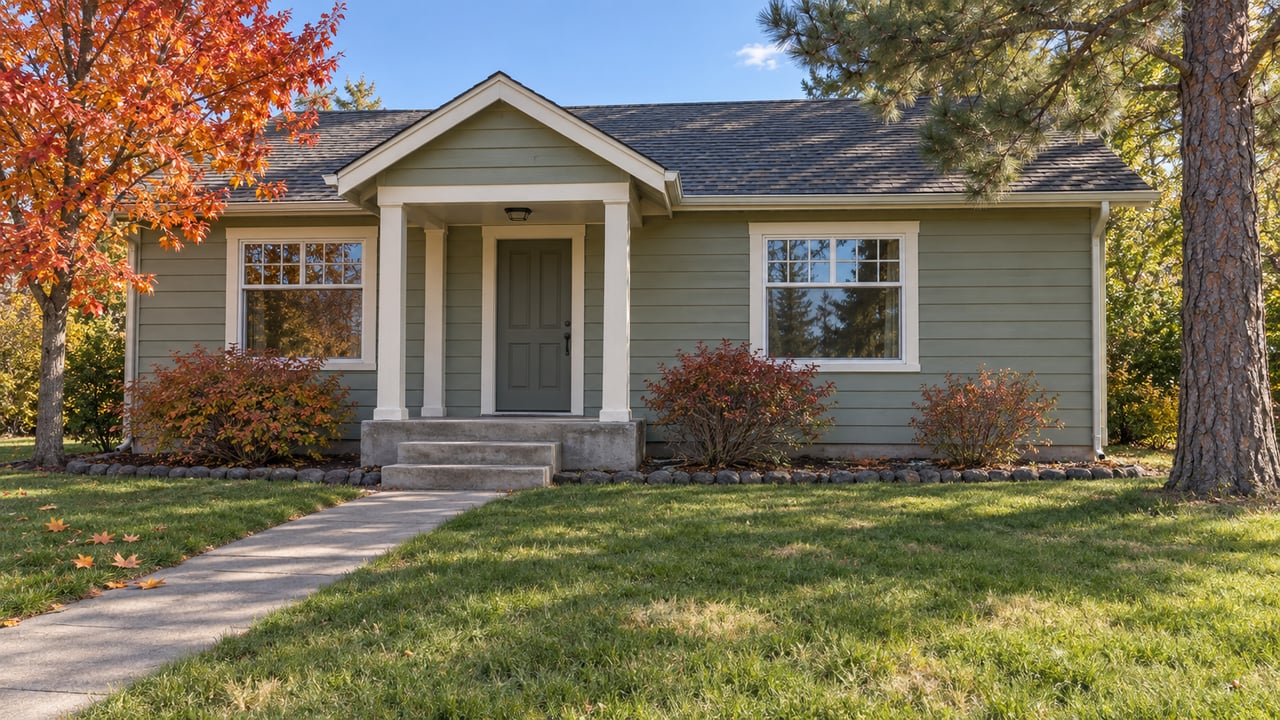
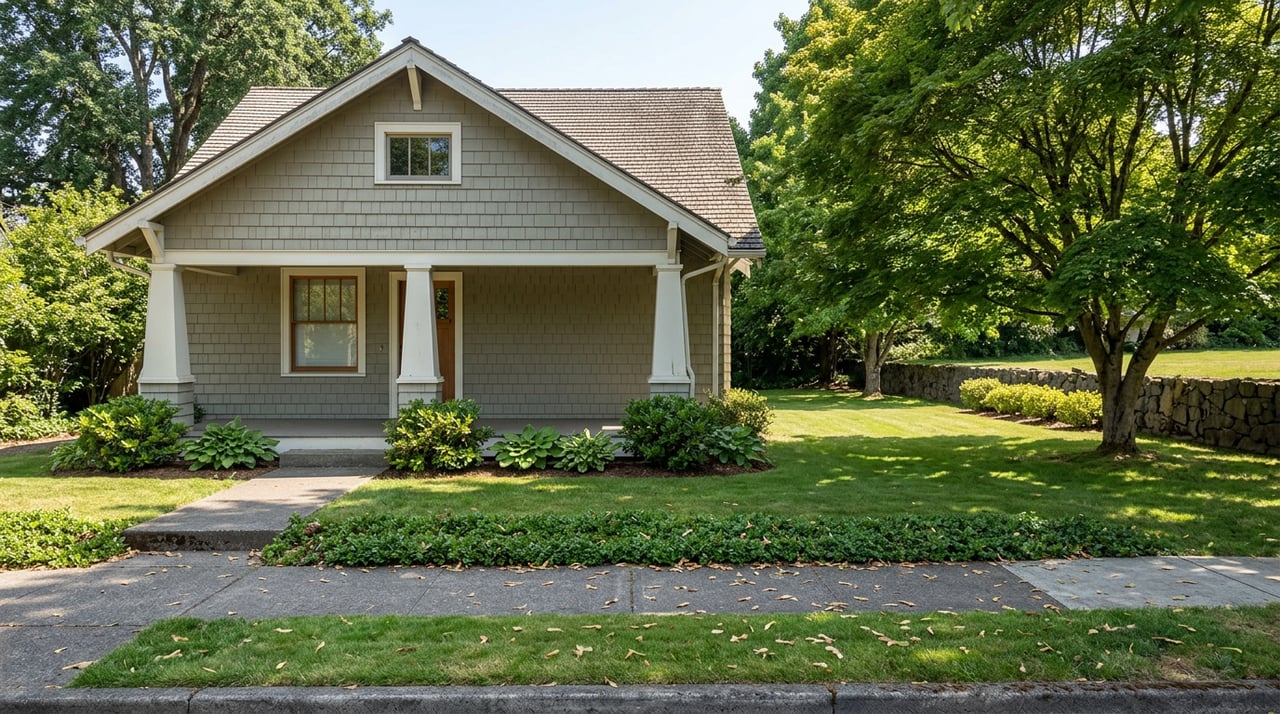
Now look at a specific single-story house on the market in Manito-Cannon Hill this August. Median asking price for that product type: about $689,000. Median time to find a buyer: 43 days. Average number of offers: one. That's not a typo and it's not a slow month citywide. It's a specific pocket, inside a neighborhood people assume is uniformly hot, behaving nothing like the headline.
The gap exists because "South Hill" isn't one market. It's a label real estate portals and Realtors both use for convenience, stretched across Rockwood, Manito, Cannon Hill, Comstock, and the High Drive bluff, five areas with different lot sizes, different architecture eras, and right now, different price trajectories. Comparing a house you're bidding on to the blended South Hill median is like comparing your commute time to the average for the whole state. The number is real. It just doesn't describe your street.
One median, two directions
Pull the neighborhood-level data apart and the picture gets more interesting than "South Hill is expensive."
| Price signal | Direction (year over year) | |
|---|---|---|
| Rockwood | $674,773 median sale price, May 2026 | up about 1% |
| Manito-Cannon Hill | $559,812 median sale price, May 2026 | down about 2.6% |
| Spokane citywide | $449,000 median asking price, August 2026 | reference point only, different metric |
That citywide row isn't a fair same-month comparison since it's an asking price snapshot rather than a closed-sale median, but it's useful for scale: even the softer of the two South Hill pockets is closing roughly $110,000 above the city's current asking baseline.
The more useful comparison is the first two rows, because they use the same methodology and the same month. Rockwood gained value over the past year. Manito-Cannon Hill, its close and architecturally similar neighbor, lost value over the same period. These aren't distant submarkets with different housing stock explaining the split. They're two adjoining pockets of the same historic South Hill grid, moving in opposite directions at the same time.
There's a second wrinkle worth flagging, because it shows how easily "the median" gets built differently by different sources. One portal's snapshot of just the Manito boundary, drawn without Cannon Hill folded in, put the median there closer to $599,000 in August 2026, with an average sale price of $585,895 and homes spending about 28 days on market. That's a meaningfully different number than the combined Manito-Cannon Hill figure of $559,812. Same streets, overlapping boundaries, two different medians, because two providers drew the map differently. If you've seen a South Hill number online and it didn't match what your agent quoted you, this is often why. The number isn't wrong. The boundary underneath it changed.
Why the walk to Manito Park buys two different markets
Zoom in further and the pattern holds inside each pocket too. Comstock's interior streets, the ones a few blocks back from the park with no view, tend to price more moderately than the neighborhood's edges. High Drive, which runs the bluff overlooking the Latah Creek valley, commands a real premium for the view and for direct access to the trail network below it, more than 20 miles of trail maintained by the nonprofit Friends of the Bluff on the forested hillside locally known simply as "The Bluff." A buyer paying for a High Drive lot is largely paying for that outlook and that access, not for square footage or lot size.
One home-value estimate service, checked in August 2026, shows the same stratification using its own methodology: Rockwood highest, Manito-Cannon Hill in the middle, Comstock lowest, even though the exact dollar figures it produces run below the closed-sale medians above. That's expected, since an estimate spans every owned home in an area including ones that haven't traded hands in decades, while a sale median only reflects what actually closed. The dollar amounts disagree. The ranking doesn't. Location within South Hill, not South Hill membership itself, is doing the pricing.
Proximity to Manito Park's specific features carries its own premium too. Homes within an easy walk of the Nishinomiya-Tsutakawa Japanese Garden and the Gaiser Conservatory, or a few blocks from the Perry District's coffee and retail strip, tend to price above interior blocks with the same square footage and the same build year. Cannon Hill Park does something similar on a smaller scale for its immediate ring of streets. None of this shows up in a single South Hill number. All of it shows up in an appraisal.
The variable neither portal prices
Here's what none of the medians above capture, and it's arguably more consequential than any of them individually: what the lot itself is now allowed to become.
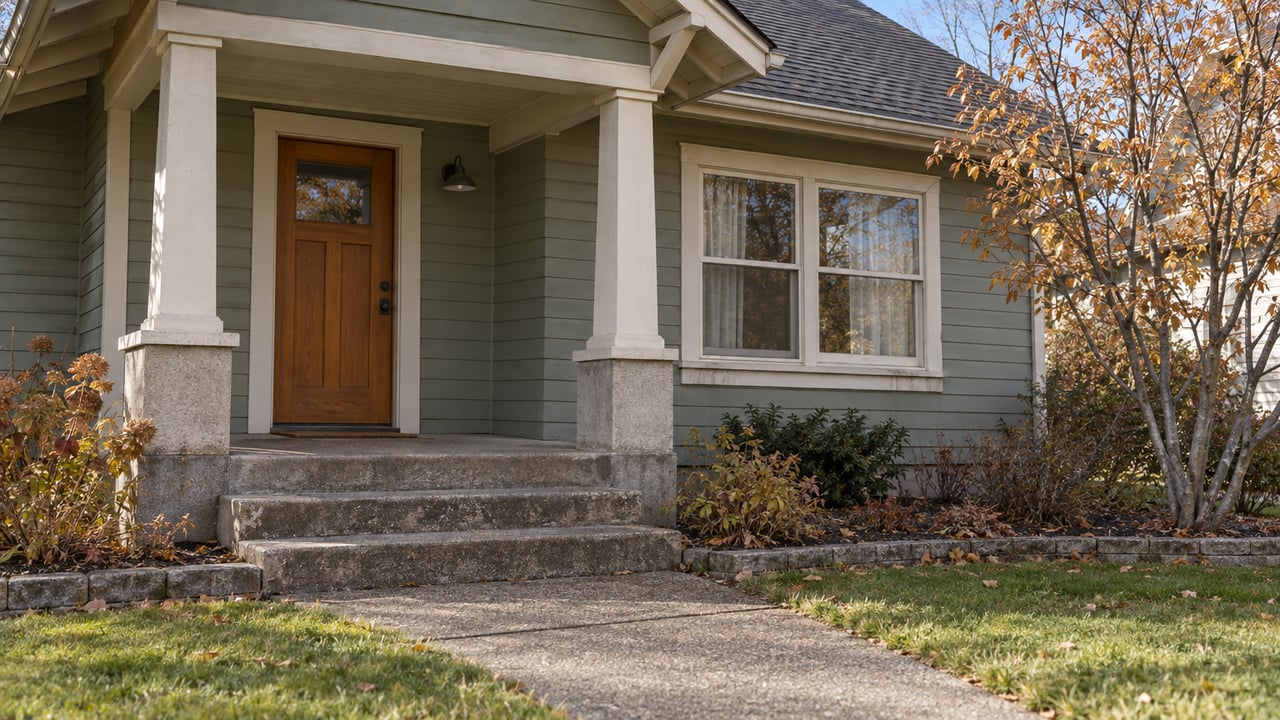
Makers Architecture reports that Spokane passed an emergency ordinance in June 2022 allowing fourplexes on residential lots citywide. That ordinance became permanent in 2024 after a 16-month trial, and the current code goes further, allowing up to six units on qualifying residential lots in nearly every zone in the city, with limited exceptions for residential-agriculture parcels. This isn't a proposal or a planning document. It's built and occupied already, including inside South Hill itself. A project called Spokane Six now sits on South Grand Boulevard, a working example of the code applied on the ground, in the same South Hill neighborhood where a 1920s Craftsman on an oversized lot might be listed for sale right now.
A comp is a record of what already happened on a lot. It doesn't say anything about what that lot is now allowed to become.
South Hill has an unusual concentration of large, old single-family lots, a byproduct of how Rockwood and Manito platted a century ago at lower density than the city builds today. Under the current code, a portion of those lots carry redevelopment capacity that a traditional appraisal, built entirely from comparable single-family sales, doesn't account for. This doesn't fully explain why Rockwood is up and Manito-Cannon Hill is down. It's one more variable sitting underneath both numbers, invisible in the median, and it cuts in different directions depending on who's looking at the lot. A builder pricing a large interior parcel for its buildable capacity and a family pricing the same parcel for the house sitting on it today are running two different appraisals on the same address.
What this means if you're pricing a South Hill house right now
If you're selling an older home on a larger or oversized lot, especially on an interior block away from a designated historic overlay, get a value opinion that looks at both the house as it sits and what the lot itself is zoned to allow. Pricing purely off recent single-family comps can leave real value on the table if your parcel qualifies for middle housing.
If you're bidding on a character home in South Hill, ask two questions your portal search won't answer. First, does the days-on-market and offer pattern for this specific pocket and this specific product type, a rancher versus a two-story Craftsman, match the broader South Hill story you've read, or lag behind it. Second, what's the zoning capacity of the larger lots adjacent to the one you're bidding on, particularly if it's an oversized parcel that could someday attract a builder rather than another buyer.
If you're comparing pockets by median price alone, confirm which boundary and which metric produced the number in front of you. A "Manito" figure and a "Manito-Cannon Hill" figure aren't measuring the same footprint, and a listing-price snapshot isn't measuring the same thing as a closed-sale median.
FAQ
If Manito-Cannon Hill's median is down 2.6% year over year, does that mean home values there are falling? Not necessarily in a way that affects any individual home's worth. Micro-neighborhoods like this one see a relatively small number of closings each month, so the median can shift based on which specific homes happened to sell rather than a broad change in value. A month with a few large estate sales pulls the number up; a month weighted toward smaller ramblers pulls it down.
Could a six-unit building actually go in next to a house I'm considering in South Hill? Technically, under the code in place since 2024, most residential lots in Spokane qualify for up to six units, with limited exceptions. Whether it happens on a specific block depends on lot size, proximity to transit, and simple project economics, not the neighborhood's reputation. Checking the zoning and lot dimensions on any adjacent oversized parcel is worth the ten minutes it takes.
Is Rockwood still worth the premium over Manito-Cannon Hill? That depends entirely on what you're buying it for. If it's proximity to downtown and a track record of appreciation over the past year, Rockwood's numbers support the premium. If it's park adjacency, garden access, or lot size, Manito-Cannon Hill's softer median might reflect opportunity rather than decline. The right answer is specific to the block and the house, not the neighborhood name on the listing.
South Hill was never one market, and this year's numbers make that harder to ignore than usual. If you're trying to figure out what a specific address is actually worth, in this pocket, on this lot, under the zoning that applies to it today, that's exactly the kind of read The Collection does for clients before a number ever goes on a sign. Request a complimentary consultation and home valuation, and we'll walk the comps, the zoning, and the block with you before you make a decision based on a median that might not describe your street at all.
This article is general information, not legal, tax or financial advice. Consult a qualified professional about your situation.