Most sellers treat inspections as a buyer's problem. On the South Hill, that assumption has a cost. The ridge is defined by pre-1980 Craftsman and mid-century houses on generous lots under a mature conifer canopy, and two of the most common deal-shaping findings on those homes, a compromised sewer lateral and a legacy heating oil tank, are already sitting inside Washington's Form 17 whether you look at them or not.
The mechanism worth understanding before you list: Form 17 asks the seller to disclose based on actual knowledge. The moment you order a pre-listing inspection or a sewer scope, you create that knowledge. You do not get to unsee it. So the real decision is not whether the buyer's inspector will find these things. It is which set of answers you want to be writing on the disclosure form.
Three questions a South Hill buyer's inspector is really asking
An inspector on a 1948 home near Manito is not being paranoid. They are working from patterns specific to the South Hill's housing stock and soils.
- What is the lateral made of, and how far are the roots into it? South Hill sits on glacial till and volcanic soil, a combination that drains poorly and shifts unevenly, stressing underground pipes over time. Mature ponderosa and Douglas fir compound the problem by chasing moisture into any joint they can find.
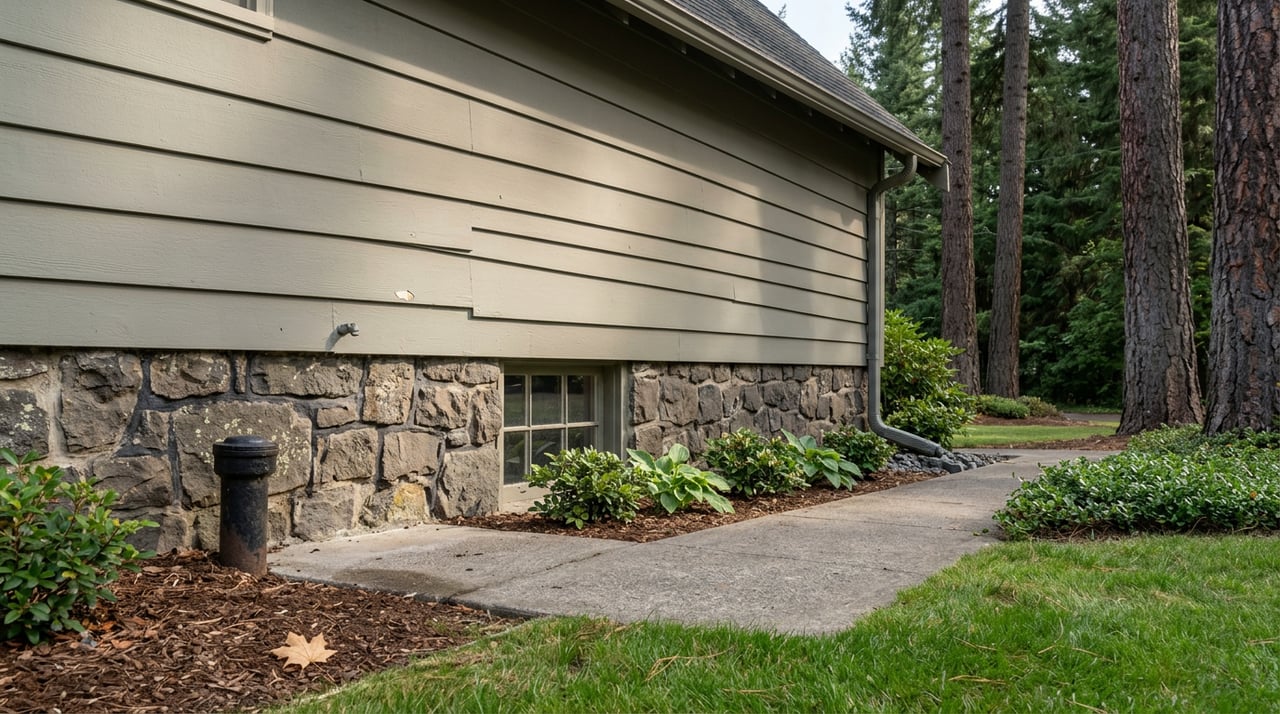
- Is there evidence a heating oil tank was ever here? Copper lines running to a former burner, a capped fill pipe near the foundation, a vent stub through the siding. If any of these show up, the next question is whether the tank was properly decommissioned or just walked away from.
- Does the permit history match what the house looks like? Finished basements, enclosed porches, and rear additions from the 1970s through 1990s often lack matching permits, and Form 17 has a specific line for that.
The sewer scope decision
A camera scope of the side sewer typically runs $200 to $400 in the region and is now standard practice for buyers looking at anything built before roughly 1980. On the South Hill, the finding rate is high enough that many listing agents talk about it as a when, not an if.
The reason is materials. Older Spokane homes commonly ran clay or cast iron laterals, and a specific cohort built between the late 1940s and early 1970s can have Orangeburg pipe, a wood-fiber and bitumen product that softens, deforms, and eventually collapses with age. That single manufacturing window overlaps a large slice of the ridge's housing inventory.
If a scope shows offsets, root intrusion, or a collapsed section, the seller has three real choices: replace it before listing, price the home to reflect the finding and disclose it, or wait for the buyer's inspector and negotiate under time pressure inside the inspection contingency. The third option is the one that most often erodes net proceeds, because the buyer is bidding against the cost of walking away rather than the cost of the repair.
Trenchless pipe bursting through a single access point is now common in Spokane and can be completed in a day or two with an HDPE line carrying a long warranty, which is a materially different sale story than "we hope the pipe is fine."
The oil tank question, and what "decommissioned" actually means
Washington has required decommissioning of out-of-service underground heating oil tanks since June 30, 1995. If a South Hill house was converted from oil to gas or electric anytime in the last several decades, the tank should have a paper trail. Often it does not.
Closure in place, per the International Fire Code and the Washington Pollution Liability Insurance Agency, is not "we filled it with sand and moved on." It requires each of the following:
- Contents removed. All flammable and combustible liquids pulled from the tank and connected piping, excluding vent lines.
- Interior cleaned. All liquid and built-up sludge removed from the tank.
- Piping disconnected. Suction, inlet, gauge, vapor return, and vapor lines detached.
- Tank filled with an approved inert solid. Sand, concrete slurry, or foam, fully filling the tank volume.
- Remaining underground piping capped or plugged.
- Above-grade fill piping permanently removed.
- Records retained. Tank size, location, and date of closure kept by the property owner.
Two facts turn this from a paperwork item into a pricing question. First, there is no statute of limitations on a homeowner's liability for contamination from a leaking home heating oil tank in Washington. Second, cleanup for a documented leak can run well into five figures and is not typically covered by standard homeowner's insurance. The Washington Pollution Liability Insurance Agency runs a Heating Oil Loan and Grant Program that can offset cleanup costs for qualifying owners, and that program is worth understanding before you sign anything on Form 17.
Why Form 17 changes the moment you order a pre-listing inspection
Washington's Seller Disclosure Statement, codified at RCW 64.06, asks about the sewer system, structural components, systems and fixtures, and environmental conditions including underground storage tanks. Seller answers are limited to actual knowledge at the time of signing. The buyer has three business days to rescind after delivery unless that right is waived in writing.
The strategic hinge is this: "Don't know" is a legitimate answer only when it is true. A pre-listing inspection or sewer scope creates knowledge that flows directly onto the form. Once documented, the seller cannot mark "Don't know" on any question the report addressed. Guessing "No" when the accurate answer is "Don't know" is one of the most common ways sellers create post-closing exposure for themselves.
That means the pre-list inspection is not a neutral due diligence step. It is a choice about which section of Form 17 you want to answer with specificity and which you want to leave to the buyer's process.
What this looks like at a $590,000 median
South Hill's three-month median sale price sat at roughly $590,000 with about 18 days on market as of May 2026, with the neighborhood's typical single-family range running from the mid-$400s into the $700s. That range matters because a $12,000 to $25,000 sewer line replacement or a $6,000 to $15,000 oil tank removal reads very differently at a $500,000 sale than at $850,000, and the negotiation leverage flips depending on when the finding surfaces.
A seller who scopes the lateral, replaces it if needed, and lists with the receipt attached is negotiating from a fixed cost. A seller who lets the buyer's inspector find the same defect on day nine of a fifteen-day inspection window is negotiating against uncertainty, urgency, and the buyer's cost of losing the deal. Same house. Different Form 17. Different net.
A pre-list sequence that respects the mechanism
- Pull permit history first. Spokane County parcel records and the City of Spokane permit portal are free and quiet. Cross-reference them against what you actually see on the property. Anything unpermitted should be identified now, not on a buyer's inspector's punch list.
- Locate the tank question early. Walk the perimeter for fill pipes and vents, check the basement for former burner lines, and if there is any evidence of prior oil heat, look for a decommissioning certificate in your closing documents from when you bought the house. If none exists, contact the Spokane County Fire Marshal for local requirements before ordering work.
- Decide about the scope with your listing agent. If the answer is scope it, order the video, keep the file, and know that the finding will need a response on Form 17. Local firms including Kalin Excavation, Inland Trenchless, Bulldog Rooter, and Spokane Pipe Repair all perform camera inspections and can bid repairs from the same footage.
- Price the finding into the list, or fix it and market the fix. Either strategy is defensible. What is rarely defensible is silence followed by surprise.
- Document everything. Receipts, permits, certifications, and warranties travel with the property. On an older South Hill home, a clean paper file is a marketing asset.
FAQ
Does a pre-listing inspection have to be disclosed? Washington does not require sellers to order one, but any inspection you do order becomes part of your actual knowledge and must be reflected accurately on Form 17.
If the tank is filled with sand, is that enough? Not by itself. A properly closed tank in Washington requires cleaning, inert fill, disconnection and capping of piping, removal of above-grade fill piping, and a retained record of the work.
Can the buyer waive Form 17? A buyer can waive the right to receive most sections of Form 17, but the environmental section cannot be waived once the seller answers any question in it "Yes." Underground storage tanks live in that section.
An older South Hill home does not sell in spite of its age. It sells because a listing team treated the age as information to organize, not a problem to hide. If you are thinking about a sale on the ridge in the next several months and want a calm read on the sewer, tank, and disclosure decisions before they turn into negotiating points, Gayle Terry and the team at The Collection offer a complimentary consultation and home valuation to walk the property with you and map the pre-list sequence to your timeline.