If your septic system passed its last inspection and your permit with the Spokane Regional Health District shows current, are you covered when you list your Colbert or Mead property next year? The honest answer is nobody in Spokane County has fully answered that yet, and the gap between those two things is about to become the most important item on a rural North Spokane seller's pre-listing checklist.
Here is the mechanism most sellers in this corner of the county have never had to think about. Spokane's septic rules have always run on a maintenance calendar, not a transaction calendar. Starting February 1, 2027, Washington adds a second clock that runs on the sale itself, and the two clocks were not designed to sync automatically.
What actually changes on February 1, 2027
Washington's on-site sewage system rule, codified at WAC 246-272A-0270, requires that beginning February 1, 2027, property owners obtain an inspection by a third-party inspector authorized by the local health officer. The Spokane Regional Health District confirms the same date on its own program page: beginning February 1, 2027, Washington state law will require on-site septic systems to be inspected by an approved Operations and Maintenance provider prior to property transfer or sale.
That single sentence is doing a lot of work. It ties the inspection requirement to the act of selling, not to the ordinary renewal cycle SRHD already runs. Right now, if your gravity septic system is on a three-year renewal and your holding tank is on an annual one, you are compliant as long as you keep filing on schedule. After February 2027, compliance and sale-readiness become two separate questions, and Spokane County has not yet published exactly how much overlap there will be between them.
Snohomish County just went through this same transition and gives a preview of what the mechanics look like once a county formalizes them. Its Board of Health adopted a new septic inspection ordinance in April 2026 to bring the county into compliance with WAC 246-272A-0270, the same statewide law Spokane County falls under. Rather than waiting on the state's February 1, 2027 deadline, Snohomish built its local program to take effect November 1, 2026, three months ahead of schedule. The Snohomish County Health District says inspections there may be completed up to one year before closing on the home sale, which is the kind of specific window Spokane County sellers should expect SRHD to define locally as it finalizes its own process.
"These inspections help protect our environment and public health, ensure septic systems are well maintained." — Megan Dunn, Snohomish County Board of Health Chair, as quoted in The Daily Herald's report on the county's new rule
The reasoning behind Dunn's statement is the same reasoning driving the statewide rule Spokane County will fall under. Neighboring counties such as King, Skagit and Island already require such inspections, which is why this has read to some Spokane-area homeowners as old news. It is not old news here. It is new news that has been true elsewhere for years.
Where this actually lands in North Spokane
This law is written for the state as a whole, but it lands unevenly. Inside Spokane's municipal sewer service area, it changes nothing for most sellers. Outside it, in the unincorporated pockets that make up much of North Spokane's outer ring, it changes almost everything about pre-listing prep.
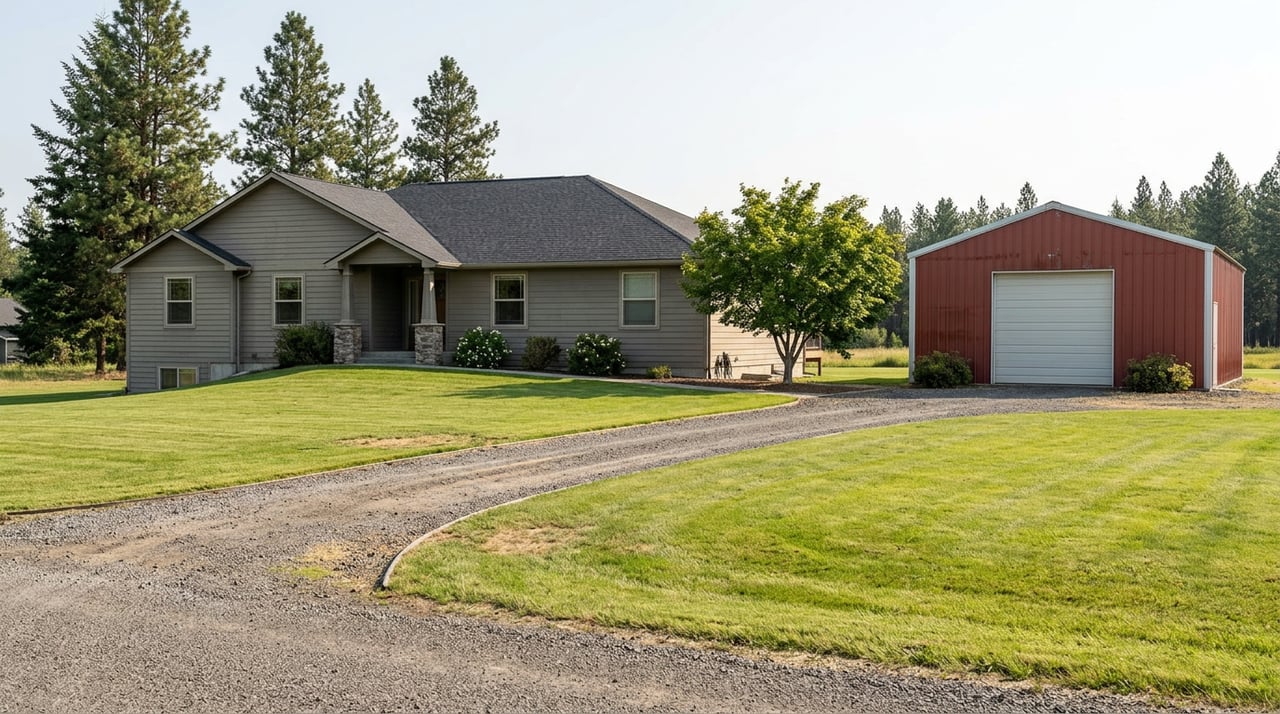
Colbert, Mead, and Green Bluff sit largely outside Spokane's municipal sewer service area, and private septic and well systems are the default arrangement there, not an occasional feature. Closer-in North Spokane neighborhoods like Five Mile Prairie, Wandermere, and Town and Country generally sit on city sewer and are unaffected by this shift. That distinction, inside sewer service versus outside it, is the real fault line this law draws through North Spokane, and it covers a meaningful share of what The Collection's team sees move through the area every year, from established acreage parcels near Mt. Spokane to newer custom builds on Peone Prairie.
For a seller in this geography, the practical question is not whether the law applies. It almost certainly does. The question is whether the inspection you already have on file will count when you actually list, or whether SRHD will require a fresh one tied specifically to the sale.
The gap nobody has closed yet
The WAC text itself leaves room for exactly this ambiguity. The local health officer may remove the requirement for an inspection at the time of property transfer if the local health jurisdiction has evidence that the OSS is in compliance and was inspected by a third-party inspector authorized by the local health officer, verify the results of the property inspection for compliance, and require additional inspections not otherwise listed. In plain terms, your county health department gets to decide how much your routine maintenance inspection counts toward the sale-time requirement, and Spokane County has not yet spelled out its answer.
Local septic contractors are being candid about this uncertainty rather than papering over it. Dow Rocks, a Spokane-area O&M provider, notes that rules around O&M requirements are evolving and recommends checking directly with SRHD, calling the district the authoritative source for what applies to your property.
Here is how the two systems compare as they stand today:
| Today, under SRHD's existing program | Starting February 1, 2027 | |
|---|---|---|
| Trigger | Fixed renewal calendar | Tied to property transfer |
| Frequency | Gravity tank-and-drainfield systems every three years; other systems with pumps or electrical components annually | Inspection required regardless of where the renewal calendar sits |
| Who inspects | A certified O&M provider through the Washington On-Site Sewage Association | A third-party inspector authorized by the local health officer |
| Filed with | SRHD, to keep the operational permit current | SRHD, with the added purpose of clearing the sale |
| Does an existing report satisfy it | Not automatically. The local health officer decides case by case | Still being defined for Spokane County |
That last row is the whole story. A permit that is current under column one is not guaranteed to satisfy column two, and the decision sits with SRHD, not with the seller or the listing agent.
A sequence that respects the actual timeline
With about six months left before the deadline, there is enough runway to get ahead of this cleanly, but only if the sequence starts with a phone call rather than a pumper.
- Call SRHD's Liquid Waste program before you do anything else. Ask directly whether your system's last inspection, and its expiration date, will count toward the February 2027 transfer requirement, or whether a fresh sale-specific inspection will be required regardless. SRHD can be reached at 509.324.1560 ext. 1 or by email for permit questions.
- Confirm which report form your system needs. A septic system with a tank, drainfield, and other components uses the Operations and Maintenance Inspection Report Form, while a holding tank with no drainfield uses the Holding Tank Annual Inspection Report Form. Filing the wrong form can cost you weeks.
- Track down your as-built or record drawing before you need it. If you need help locating your system or want a copy of the record drawing, SRHD's office can be reached by email or at 509.324.1546. Older Colbert and Mead properties, especially those on acreage that predate current permitting software, sometimes have no drawing on file at all, which slows any inspection down.
- Time your inspection to your actual listing window, not your renewal calendar. If your last inspection was fresh two years ago, do not assume it still applies once you are within a few months of putting the property on the market. Ask SRHD to confirm in writing.
- Fix anything the inspector flags before your listing photos go live. Any observed deficiencies must be corrected, and certain repairs require a permit from SRHD before construction begins, which means a failed drainfield discovered in month one of your listing can quietly become a closing delay in month three.
FAQ
Does this apply to homes already inside Spokane's city sewer service area? No. The rule is specific to on-site sewage systems, meaning septic tanks, drainfields, and holding tanks. Homes connected to municipal sewer are not affected by this requirement.
Is a septic inspection required to sell in Spokane County right now, before 2027? Not as a transfer-specific requirement. SRHD's existing rule requires owners to keep their operational permit current through periodic O&M inspections, but that obligation runs on the ownership calendar, not the sale calendar, until the new law takes effect.
What happens if a seller lists without addressing this and the rule is already in effect? The WAC gives local health officers authority to require additional inspections and to decline to waive the transfer requirement, which means a listing could stall at the point SRHD is asked to sign off on the transfer if the system has not been inspected under the new standard.
There is enough time left before February 2027 to walk through this calmly, if you start with the right questions instead of the right pumper. If you own a septic or well property anywhere from Colbert to Green Bluff and you are thinking about listing before or after the deadline, The Collection can help you sequence the inspection, the paperwork, and the timing so none of it becomes a surprise at closing. Request a complimentary consultation and home valuation to start the conversation before your listing date is on the calendar.
This article is general information, not legal, tax or financial advice. Consult a qualified professional about your situation.